Tuesday, June 30, 2015

The flowers that bloom on roadside verges

Spiked rampion – as featured in Grimm's fairytale Rapunzel, and now appearing on Britain's roadsides. Photograph: blickwinkel / Alamy/Alamy
Big splashes of colour are carpeting the verges of many country roads. Foaming white sprays of cow parsley seem to be almost everywhere, sometimes towered over by their big cousin, the giant hogweed. The brilliant white ox-eye daisy, red campion, yellow buttercup and blue harebell are just some of the many other flowers now blooming on the verges. These flowers usually pass us by in a blur, but roadside verges are becoming increasingly important refuges for wild plants, especially if left to grow. And as traffic speeds past, it carries the seeds in the slipstream and helps spread the plants far and wide.

In fact, two-thirds of all British wildflower species occur somewhere on roadside verges, including rarities such as the spiked rampion, with its unusual creamy-white spikes. According to the Grimm's fairytale Rapunzel, spiked rampion was the stolen plant in the story, and on the continent it is known as white Rapunzel.

Some roadside plants originally came from the coast, where they feed on salty air and saltwater. But now these salt-tolerant plants can feed on the salt sprayed on roads during winter. One such plant is the wild carrot, originally found on coastal clifftops. And Danish scurvy-grass is also becoming common on busy roads – it is hard to believe that a century ago this plant was only found on coastal salt marshes. The charity Plantlife has launched a Road Verge campaign to preserve verges and highlight their importance for wildflowers.

Monday, June 15, 2015

Flowers For Abundance

A friend of the author is son to be married, so obviously wedding plans and subtleties have been that talk for days. In the case of the bride to be, this moment of a wedding carries a meaning of extravagance, wonderment, and pride.
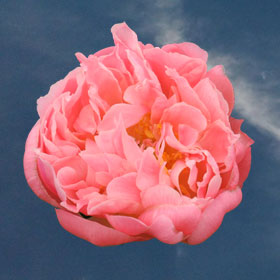
With those things being said, once you come to deciphering what symbols stand out most for you, this can play a great role in the wedding itself. Think of gorgeous fluffy peonies and how loud they are. A great expanse and high petal count speak of abundance and are most enchanting.They have the appeal of roses but the grandeur of the extravagant dresses from the 16th century fashion. They are interminably classic.


For a less fragrant counterpart, but equally impressive, we recommend hydrangeas, which have a phenomenal shape, almost globe-like. Rounded blossoms make for real eye catchers!
It does not matter if you are looking for a free flower delivery of wholesale flowers online to delivery to California or Tennessee, we have got you covered across the nation.

Monday, April 13, 2015

Alys Fowler: comfrey, pulmonaria and hairy-footed flower bees

I have a huge fondness for the hairy-footed flower bee. They hover around you as if they are checking you out: I like a moment where nature turns the table and stares back at you. And it’s hard not to love a bee that likes to stick out its tongue. When they are not doing this, they fly fast; they dart about, then hover, then go back to darting. The male bee emerges first in March; he is bright ginger with hairy feet and a blondish moustache. The females are almost entirely black. You often find them checking out pretty flowers, tongue out in preparation. They are very partial to the lungwort family.
http://i.guim.co.uk/static/w-620/h--/q-95/sys-images/Guardian/About/General/2015/4/7/1428403601633/Alys-Fowler-Pulmonaria-Bl-007.jpg
The bees are on the wing from spring to early summer, by which point they build a single nest, laying their eggs in excavations, mud banks and soft mortar in walls. They are incredibly gentle: you’d have to squeeze one tight to get it to sting.
Any opportunity to please such a wonderful bee should be embraced. The obvious choice is to plant pulmonaria. P. ‘Blue Ensign’ with its tropical ocean-blue flowers borne about dark green foliage doesn’t mind shade, so will happily sit under shrubs as long as the soil stays moist. ‘Trevi Fountain’ is as good a blue; the leaves are flecked with silver spots and it flowers for as long as it can. Or if a more refined white is your thing, ‘Sissinghurst White’ is one of the first pulmonarias to flower, starting in March and ending in April. Red lungwort (P. rubra) is more coral pink than red; it repeat flowers into early summer. P. rubra, P. ‘Blue Ensign’ and ‘Trevi Fountain’ look lovely planted with the Japanese painted fern Athyrium niponicum var pictum ‘Ursula’s Red’, which has reddish-bronze growth.
I also have a fondness for comfreys, though only if you have space to let them roam, as they are rather rambunctious. I use dwarf comfrey (Symphytum ibericum) under my fruit trees. It has rusted-red flower buds that open to white flowers. These appear before a new flush of leaves (it’s not evergreen in very cold spots). It is easy enough to keep under control; just hack away at it. The spoils can be rotted down to feed plants.
S. azureum is invasive, but lovely. It has grey-blue green leaves and pale azure flowers, and will run away with your garden if you let it. S. tuberosum is much easier to control and has soft lemon yellow flowers. Like dwarf comfrey, it doesn’t mind shade or poor soil.
If you buy any of these plants now, while in flower, water regularly until you see new signs of growth. And make sure they are pesticide-free, otherwise it’s not much of a treat for the bees.

Monday, March 9, 2015

All bets are off for forecasters in the unpredictable month of March

Geese enjoy the spring weather in St James's Park, London.
“March: many weathers”. When it came to forecasting the weather for this month, our ancestors certainly knew how to hedge their bets.
Perhaps they had a point. For March can be one of the most variable and unpredictable months of the whole year, weatherwise.
We can experience freezing conditions (as in 1962, 1963 and in the very cold March of 2013), or warm, spring-like weather, as we saw in 2014, when the contrast with 12 months earlier could hardly have been greater.
We know to expect March winds – especially at the beginning of the month – for as the old saying goes: “March comes in like a lion and goes out like a lamb”.
But frost and fog are also frequent, as are regular falls of snow, especially in northern Britain.
Our ancestors welcomed thunder in March, as it is supposed to lead to a fruitful harvest. At least that’s the opinion of the Germans.
However, the French and Portuguese beg to differ, suggesting that thunder will only bring sorrow for the rest of the year. One saying is especially relevant now that we are experiencing earlier and earlier springs.
“March flowers make no summer bowers” points out that the earlier the flowering season, the fewer flowers will appear later in the summer.
In fact the two are not necessarily connected, as what happens between now and July or August will have a far greater effect than the weather of this particular month.