Wednesday, August 19, 2015

Alys Fowler: a little neglect goes a long way in a garden

I don’t mean to neglect you, I tell the garden, but I have. I hurriedly try to squeeze in a few more lettuces that have spent too long in modules. I ignore the fact that the young chard already has blisters of leaf miner and pretend not to notice that the slugs have razed nearly a whole tray of beans.
Plantago major ‘Rosularis’ will self-seed readily. Photograph: Heather Edwards/GAP
The garden sighs a little, flops about like a bored teenager and offers up a strawberry or two. I sit down on the bench and wonder if there’s any point unpicking this mess. It is already too late to stake; I could cut back, but the bees are enjoying the riot. Instead, I eat more strawberries and hunt around for a raspberry or two.

I don’t feel bad for the garden. It’s having fun sowing what it likes, where it pleases. Parsnips appear in strange places and it’s filled all the gaps with opium poppies and other oddities. Plantago major ‘Rubrifolia’ is coming up all over the place. This plant deserves more recognition. It’s a dark purple-leaved form of the greater plantain, P. major, a wild thing of disturbed places, path edges, tracks, gateways and cultivated grounds. It’s one of those plants that knows exactly where to seed itself – never where you might imagine, but once you see it there, resplendent with its large leaves, you think, “How clever.”

In a similar vein is P. major ‘Rosularis’, which has been in cultivation since medieval times. Its strange double flowers are often described as rose-like. I think a rose might be angered by this description: they are large and green and very odd, though in a good way. It reaches 15cm or so and is happy in shade or sun, self-seeding readily. It loves gravel paths and well-drained margins, though if you give it lush conditions it will rise to the challenge in a luxurious manner. P. major ‘Frills’ is a curly, parsley-like version that looks best in a pot, where you can admire its strangeness up close, but is lost among other things in a border.

If you can’t get hold of a plant, you can sow these varieties at any time of year, though spring is fastest and the majority of the seed will wait till then. Seed germinates best in very free-draining compost, so add up to 50% grit if necessary.

All these plantains are edible, but you’d have to be very hungry to want to eat them. The young leaves are best when very small, and can be used as a pot herb (aka a leafy green substitute).

However, there is one plantain that is worth eating. P. coronopus, buckshorn plantain, is still widely grown in Italy as a green, where it is known as erba stella. The leaves work wonderfully in salads when picked young and crunchy, or lightly steamed as a vehicle for butter. It’s a tough nut, growing in heavily compacted ground, and doesn’t even mind being trampled on. It’s a perfect edge plant for the vegetable garden, where it will make an excellent frill to any bed.

Tuesday, July 14, 2015

Alys Fowler: tough plants for windy plots

Japanese anemones are pretty undefeatable even in dry, shady soil. Photograph: Alamy
I am one of those driven mad by too much wind. My thoughts become hounded, I quickly become irritable. I can’t adapt but, with time, there are plenty of plants that will.

Early on in a plant’s life, high winds loosen roots, break and twist fragile stems and scorch foliage as the plant battles to keep moisture levels up. For tender young plants, some sort of barrier until they get settled is important in exposed situations.

Plants have adapted in all sorts of ways to life in the turbulent zone: bananas have leaves like sails, till they rip themselves to shreds so as not to blow over; trees send roots in the opposite direction to the prevailing wind to anchor in; grasses bend and alpines cling. The trick is to choose the right lot, so your whole garden sways appropriately. Lush, quick growth from too much nitrogen is always weak, so treating your perennials a little mean will, in the end, result in stronger growth. For borderline floppers, staking early is everything. If you feel windswept, they will, too, so don’t gamble – stake.

The best shelter is a layer of trees and shrubs staggered to filter the wind. Hawthorn makes resilient hedging, while Scots pines, willows, sycamores and poplars are flexible enough for the toughest gales. If you don’t have space for them, windbreak material or wattle fencing will do.

The back of the border should be made up of hardy soldiers to shelter the rest. Eupatoriums are among the toughest; they have large umbels of flowers in late summer – and the butterflies adore them. Eupatorium purpureum subsp maculatum or Joe-pye weed is an American species with some lovely cultivars, including the compact ‘Purple Bush’. I’ve seen it grown without support in some tough places, but if in doubt, stake. It likes organic matter around its feet, so mulch in spring.

Vernonia also survives extremes and makes a brilliant framework. It’s a classic prairie plant, so suits being with eupatorium and robust grasses such as miscanthus. Vernonia fasciculata or ironweed has short, sturdy stems, making it very tough. Sea holly (eryngium species) is worth a look, particularly for more free-draining scree, gravel and coastal gardens. Japanese anemones are pretty undefeatable, even in dry, shady soil, particularly if – you’ve guessed it – you stake them.

Short, thick-stemmed alliums such as A. angulosum are perfect near the front of a border, and veronicas rarely need staking. V. ‘Shirley Blue’ makes undulating mounds for the front of the border and trailing V. umbrosa ‘Georgia Blue’ will drape over walls or border edges.

I like the white forms of the everlasting pea (Lathyrus latifolius): this will grow through shrubs or tumble down a windswept bank. Low-growing ground-cover geraniums, if given something to get their roots into, will take any aspect. G. macrorrhizum ‘Ingwersen’s Variety’ is good for shade and evergreen to boot.

Tuesday, June 30, 2015

The flowers that bloom on roadside verges

Spiked rampion – as featured in Grimm's fairytale Rapunzel, and now appearing on Britain's roadsides. Photograph: blickwinkel / Alamy/Alamy
Big splashes of colour are carpeting the verges of many country roads. Foaming white sprays of cow parsley seem to be almost everywhere, sometimes towered over by their big cousin, the giant hogweed. The brilliant white ox-eye daisy, red campion, yellow buttercup and blue harebell are just some of the many other flowers now blooming on the verges. These flowers usually pass us by in a blur, but roadside verges are becoming increasingly important refuges for wild plants, especially if left to grow. And as traffic speeds past, it carries the seeds in the slipstream and helps spread the plants far and wide.

In fact, two-thirds of all British wildflower species occur somewhere on roadside verges, including rarities such as the spiked rampion, with its unusual creamy-white spikes. According to the Grimm's fairytale Rapunzel, spiked rampion was the stolen plant in the story, and on the continent it is known as white Rapunzel.

Some roadside plants originally came from the coast, where they feed on salty air and saltwater. But now these salt-tolerant plants can feed on the salt sprayed on roads during winter. One such plant is the wild carrot, originally found on coastal clifftops. And Danish scurvy-grass is also becoming common on busy roads – it is hard to believe that a century ago this plant was only found on coastal salt marshes. The charity Plantlife has launched a Road Verge campaign to preserve verges and highlight their importance for wildflowers.

Monday, June 15, 2015

Flowers For Abundance

A friend of the author is son to be married, so obviously wedding plans and subtleties have been that talk for days. In the case of the bride to be, this moment of a wedding carries a meaning of extravagance, wonderment, and pride.
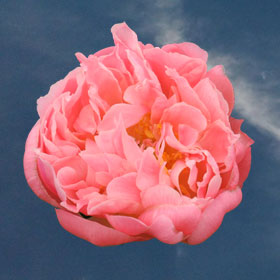
With those things being said, once you come to deciphering what symbols stand out most for you, this can play a great role in the wedding itself. Think of gorgeous fluffy peonies and how loud they are. A great expanse and high petal count speak of abundance and are most enchanting.They have the appeal of roses but the grandeur of the extravagant dresses from the 16th century fashion. They are interminably classic.


For a less fragrant counterpart, but equally impressive, we recommend hydrangeas, which have a phenomenal shape, almost globe-like. Rounded blossoms make for real eye catchers!
It does not matter if you are looking for a free flower delivery of wholesale flowers online to delivery to California or Tennessee, we have got you covered across the nation.